Picture your morning. Are you lacing up for a ridge run with big‑sky views, or rolling your bike onto a shady, paved path beside the Boise River? In Eagle, a few minutes north or south can put you in two very different daily rhythms. If you are choosing between foothills living and river living, you want clarity on lifestyle, tradeoffs, and the checks that matter before you buy.
This guide compares everyday life near the Boise Foothills and along the Boise River/Greenbelt in Eagle. You will see how views, trails, lot sizes, utilities, HOAs, and natural hazards differ, then get a simple checklist to vet any address. Let’s dive in.
Foothills living: what to expect
Views and scenery
Foothills neighborhoods give you panoramic valley and mountain vistas. Sunrises and sunsets can be striking from elevated lots. New master‑planned areas highlight view corridors and ridgeline access as a core lifestyle feature. Communities such as Avimor showcase how trail networks and open space frame those views.
Trails and daily routines
If you love mountain biking, trail running, and quiet singletrack, the foothills fit well. Some planned communities connect into broader trail systems, and local residents often plan routines around nearby trailheads. To get a feel for the regional network, explore the Ridge to Rivers trail system and local riding maps from SWIMBA.
Homes, lots, and density
You will find a mix of options, from compact village lots within a master plan to larger homesites and custom estates on the slopes. Many foothills districts are designed for lower net density, with larger lots and open‑space buffers. In master‑planned settings like Avimor, community centers and trails are part of the package.
Noise, privacy, and access
The foothills tend to be quieter, with more separation between homes and more natural sound. Some roads are steeper, and select estates may have private or gated access. Night skies often feel darker, and wildlife sightings can be part of daily life.
River and Greenbelt living: what to expect
Views and scenery
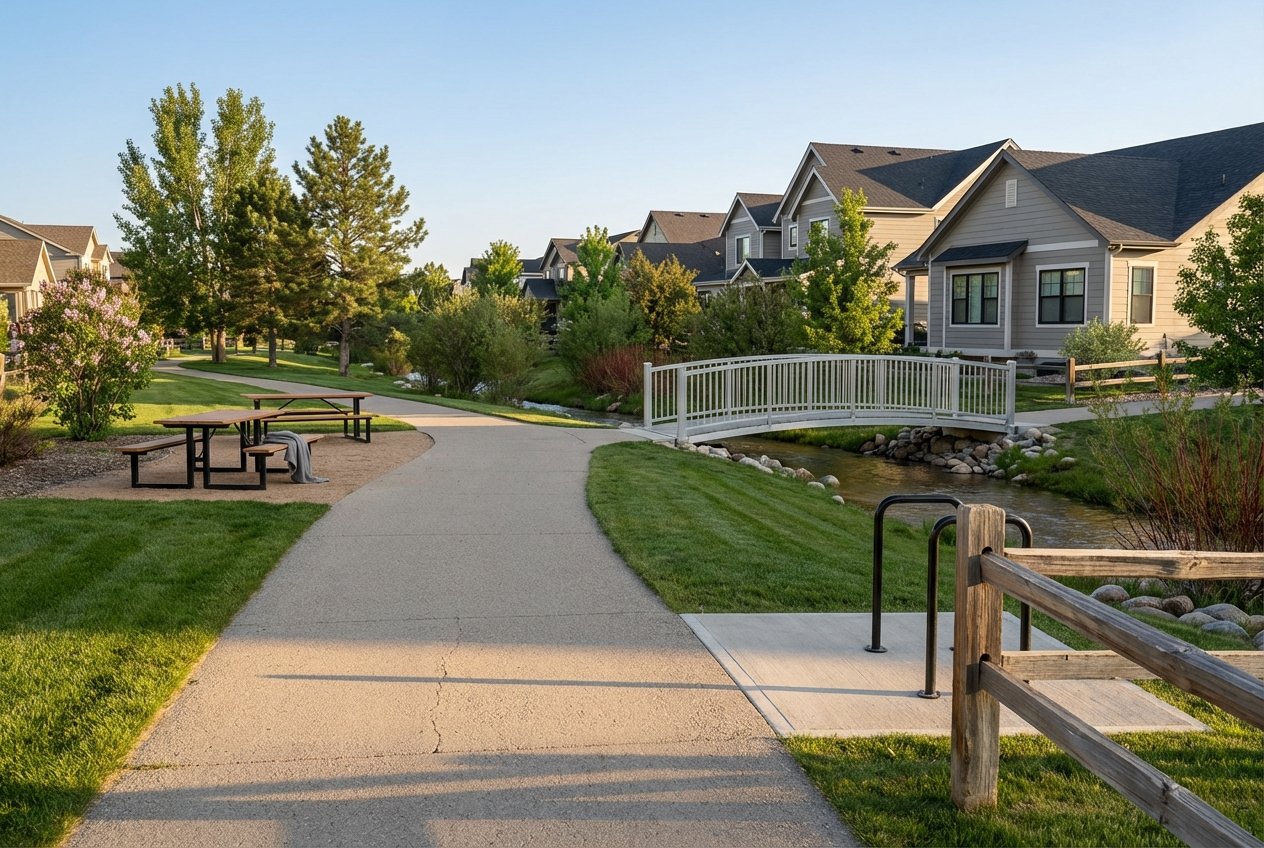
Along the Boise River, you are in a leafy, riparian corridor of cottonwoods and seasonal color. Many neighborhoods have water views across ponds or channels, and the landscape stays greener through spring and summer. The tree‑lined character is easy to feel on the Boise River Greenbelt.
Trails and daily routines
Expect a paved, multi‑use path for everyday biking, stroller walks, and easy runs. Weekend activity can pick up near parks and downtown segments, and summer brings more day‑use visitors. If you want organized river access for picnics, swimming, or non‑motorized boating, Eagle Island State Park is a major local hub.
Homes, lots, and density
Most river‑area neighborhoods are planned subdivisions with sidewalks, common paths, and ponds. Lots are often smaller than foothill estates, with some homes backing to water or pathways. Many communities use HOAs to maintain water features, landscaping, and design standards.
Noise, privacy, and access
Living near the Greenbelt feels lively and social in peak seasons. You will see walkers and cyclists, especially on sunny weekends and near parks. If you want a calm weekday routine plus vibrant weekend energy, the river corridor often strikes that balance.
Key tradeoffs to consider
Utilities and services
- Foothills: Inside master plans, you may have municipal or private community systems, and some developments highlight on‑site water reclamation and mixed service providers. Parcels outside planned areas can rely on wells and septic and may lack nearby hydrants, so plan for inspections and emergency access checks. Learn how communities like Avimor manage utilities and amenities.
- River/Greenbelt: In‑town subdivisions are more likely to connect to city water, sewer, and hydrants. Always verify at the parcel level before you write an offer.
Natural hazards and insurance
- River: Parts of the Boise River corridor fall within FEMA Special Flood Hazard Areas. If a home is mapped in a flood zone, lenders can require flood insurance and elevation certificates. Review the City of Eagle’s Floodplain Information and confirm parcel‑level determinations.
- Foothills: Parcels are in the wildland‑urban interface. Local coverage highlights the value of defensible space and home‑hardening after recent events in the area. Read this KIVI report on an Eagle foothills wildfire and defensible‑space guidance, then discuss mitigation steps with your inspector and the seller.
HOAs, covenants, and design review
HOAs are common in both settings. River subdivisions often manage ponds, paths, and exterior standards. Foothill master plans use design review to protect views and open space. Before you commit, review CC&Rs for RV parking, fencing, pet rules, exterior palettes, and landscaping requirements.
Public access and weekend patterns
Greenbelt‑adjacent homes see more pedestrian and bike traffic, plus seasonal crowds near parks and river floats. Foothills trailheads are generally quieter but can be busier on blue‑sky weekends. The best test is to visit during peak times.
Which lifestyle fits you?
- Choose the foothills if you want panoramic views, ridge runs, quieter nights, and the option for larger lots or custom homes. Trail‑forward communities like Avimor can be a great match.
- Choose the river/Greenbelt if you want daily paved‑path access, quick routes for walking and biking, smaller yards that are easier to maintain, and proximity to parks and downtown Eagle. The Greenbelt overview and Eagle Island State Park give a clear picture of the setting.
- Want a blend? Look for properties with larger lots that still have private or nearby access easements to paths. Verify flood status and any trail or riparian easements in the title package.
Due‑diligence checklist for Eagle buyers
Use this quick list to vet any address before you fall in love with the view:
- Flood zone status. Check the City of Eagle’s Floodplain Information and ask the seller for any elevation certificate.
- Wildfire and hydrants. Confirm local fire‑district response, hydrant locations, and recent defensible‑space work. Review local guidance in this Eagle foothills wildfire story.
- Water and sewer source. Verify municipal service or well/septic. If private systems, order water quality tests and septic inspections.
- HOA/CC&Rs and easements. Request recorded CC&Rs, any pond or dock easements, and riparian landscaping restrictions.
- Trail access and permissions. Confirm whether nearby trailheads and paths are public or private/common. Start with Ridge to Rivers maps.
- School boundaries and commute. Check West Ada School District assignments for the specific address and plan your time‑to‑work. See a district overview on West Ada School District.
- Day‑in‑the‑life test. Spend an hour at the relevant Greenbelt segment or foothills trailhead on a sunny weekend to gauge activity, noise, and parking. The county’s Greenbelt page explains typical use patterns.
How to compare homes on tour day
- Start with a map. Note downtown Eagle/Main Street, the Boise River/Greenbelt line to the south, and the foothills contour to the north. Short drives can produce big lifestyle shifts.
- Tour both settings back‑to‑back. Begin with a foothills community for views and elevation, then head to a Greenbelt‑side neighborhood to feel the trees and water. Keep notes on light, noise, and access at each stop.
- Ask for specifics in writing. For each contender, request utility provider details, HOA documents, and any floodplain, riparian, or WUI disclosures. If a parcel sits in unincorporated foothills, explore overlay standards in county code; this Ada County overlay reference is a helpful starting point.
- Walk the path or trail. Bring a stroller, bike, or hiking shoes and try the nearest segment. The Eagle Chamber’s Greenbelt summary helps you target local access points, and SWIMBA maps can guide you toward bikeable foothill routes.
The bottom line
Both lifestyles are uniquely “Eagle.” The foothills deliver room to breathe, big views, and trail‑first routines. The river corridor gives you daily Greenbelt access, leafy scenery, and an easy, active rhythm close to parks and town. Your best fit comes down to how you want to spend your mornings and weekends, plus a few practical checks on utilities, hazards, and HOAs.
If you want a local, high‑touch partner to compare options, tour with purpose, and negotiate with confidence, reach out to Katie Shevlin Real Estate. We will help you line up foothills and river homes in the same visit, pull the right documents early, and choose the home that fits your life.
FAQs
What is the Boise River Greenbelt in Eagle?
- It is a paved and unpaved multi‑use path along the Boise River that connects neighborhoods, parks, and nearby cities; see the county’s Greenbelt overview for maps and use tips.
How does wildfire risk impact Eagle foothills homes?
- Foothills parcels sit in the wildland‑urban interface where defensible space and home‑hardening are encouraged; review this KIVI piece on an Eagle foothills wildfire and mitigation and ask sellers for any recent assessments.
Are riverfront neighborhoods in Eagle in a flood zone?
- Some parcels near the Boise River or ponds fall in mapped Special Flood Hazard Areas, which can trigger lender‑required flood insurance; confirm status on the City of Eagle’s Floodplain Information page.
Do foothills communities have direct trail access?
- Many do, and some connect to larger regional networks; explore Ridge to Rivers maps and community amenities highlighted by Avimor.
What utilities should I verify for a foothills property?
- Confirm whether the home uses municipal services or private well/septic, the location of hydrants and emergency access, and any community‑system details provided by the seller or HOA.
How can I check school boundaries for an Eagle address?
- Look up assignments through West Ada School District resources and verify for the specific property; a district overview is here: West Ada School District.